Blog
7 Reasons to Invest in Corporate Profile Design This Year
By Funky Developers • 2026-06-29
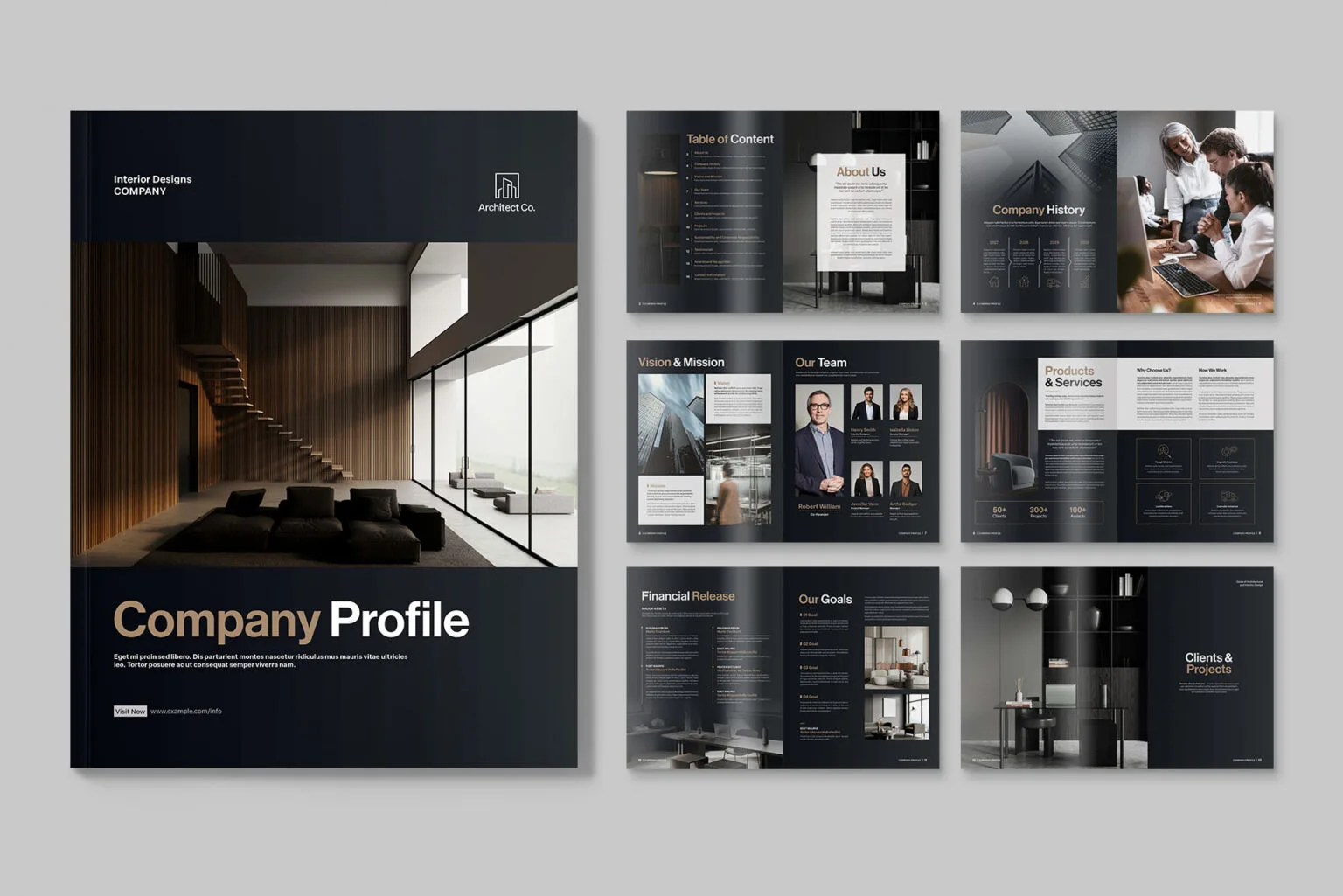
Seven substantive reasons to invest in corporate profile design — from tender readiness and sales enablement to board packs, employer brand, and reducing internal rework.
Most B2B organisations know, in principle, that their company profile needs attention. What stops them is not disagreement about whether a good profile matters — it is uncertainty about which business outcome to tie it to and who should champion the investment internally. This article lays out seven substantive reasons to design corporate profile documents properly, one per section, with enough operational detail to make the case for investment concrete. These are not abstract marketing arguments — each reason maps to a specific business outcome that a well-designed corporate profile directly supports. At the end, there is a practical note on who should own this asset and how to ensure it actually gets used.
Reason 1: Tender and Bid Readiness
Tender readiness is the most operationally immediate reason to invest in a corporate profile, and it is the one most likely to produce a measurable return in a defined timeframe. Government and institutional tenders increasingly require a prequalification document — a company profile, capability statement, or organisational overview — as part of the bid package. Organisations that do not have a credible, current, and professionally designed profile at the point of tender submission are either scrambling to produce something under deadline pressure or submitting documents that do not represent the quality of their actual capability.
The problem with profile-under-pressure is predictable: content is rushed, formatting is inconsistent, claims are not fully substantiated, and the document reads like it was assembled in forty-eight hours — because it was. Tender evaluators, who review dozens of supplier submissions, notice the difference between a document that was clearly prepared with care and one that was produced reactively.
A well-designed corporate profile that is maintained annually and has modular tender-specific annexures (past performance list, statutory compliance declarations, financial information page) can be submitted to multiple tender opportunities with minimal preparation. It reduces the response time for a new opportunity from days to hours, ensures quality consistency across all submissions, and allows your business development team to focus on tailoring the cover letter and technical response — the elements that actually differentiate bids — rather than recreating baseline company information every time.
For businesses that participate in regular tender cycles — infrastructure, government IT, defence ancillaries, healthcare supply, education sector, PSU supply chains — the profile is a perpetual business development asset, not a one-time design project. The ROI is every tender submission you can improve and every prequalification stage you pass.
Reason 2: Sales Enablement
Sales enablement is the second reason, and it operates at a different level of urgency but equal strategic importance. A corporate profile that a sales team actively uses in client meetings — rather than one that exists in a shared drive and is never opened — changes the dynamics of enterprise sales conversations.
In a first meeting with a new enterprise prospect, the profile establishes the context that verbal introductions cannot efficiently convey: the scale of the organisation, the depth of sector experience, the specific types of problems you have solved, and the evidence that your existing clients trust you with their serious challenges. This context-setting, done through a well-designed leave-behind, reduces the time spent on basic qualification questions in subsequent meetings and allows the conversation to advance to specific needs and solutions faster.
Sales teams that have a well-designed, current profile report that it increases their confidence in cold meetings and reduces the time spent explaining the organisation from scratch to every new contact. The profile also travels — it gets shared to procurement teams, forwarded to senior decision makers, and passed along the internal review chain well after the original sales meeting. A weak or outdated profile shared this way actively undermines deals; a strong one extends the sales conversation beyond the meeting room.
The sales enablement argument is strongest when the profile is designed explicitly for the decision-making journey of the target buyer — not as a generic company overview but as a document that anticipates the evaluator's questions and answers them in the right sequence. Who are these people? What have they done that is relevant to my problem? Why should I trust them? What do I do next?
Reason 3: Investor and Partner Meetings
When your organisation is raising growth capital, seeking a strategic partnership, approaching an institutional buyer's vendor onboarding process, or presenting to a private equity firm during due diligence, the corporate profile is often the first structured document the counterparty reviews before the meeting.
Investor meetings — whether for equity funding, debt facilities, or strategic alliances — require a document that communicates financial maturity, governance quality, leadership credibility, and growth trajectory. A sales-focused marketing profile does not serve this purpose. An investor-appropriate corporate profile includes financial indicators (clearly stated as unaudited summaries or referencing audited filings), governance structure, leadership bios with genuine depth, track record with specifics, and a forward-looking section that describes growth strategy without making unsubstantiated projections.
Partner onboarding processes at large enterprises and MNCs typically include a vendor due diligence questionnaire and a request for company documentation. Having a well-structured corporate profile that is pre-aligned with the typical questions in these processes — company overview, quality certifications, financial stability indicators, sustainability practices, compliance credentials — means your organisation moves through vendor qualification faster and with less back-and-forth than competitors who provide these elements piecemeal.
In these contexts, the credibility signal is not about visual polish — institutional reviewers are not judging font choices. It is about the confidence that a well-structured, complete, consistent document conveys. An organisation that cannot present itself clearly raises questions about whether it can deliver clearly in practice.
Reason 4: Employer Brand
The employer brand application of a corporate profile is underappreciated by most B2B organisations, particularly at the growth stage when hiring quality talent is a genuine competitive challenge. Senior hires — experienced professionals considering a move to your organisation — conduct significant pre-offer due diligence. They look at your website, your LinkedIn presence, public news, and, when available, any formal company documentation they can access.
A corporate profile shared with a senior candidate during the recruitment process does several things simultaneously. It demonstrates that the organisation invests in its own presentation — a signal of professionalism. It communicates the scale, trajectory, and culture of the business through curated evidence rather than recruitment rhetoric. And it gives the candidate the information they need to make a confident decision, reducing the risk of late-stage offer declinations driven by information anxiety.
For graduate recruitment and campus hiring, a profile version that foregrounds culture, team structure, and career pathway in operational terms functions as a recruitment document with genuine organisational substance — more credible than a standalone brochure designed separately from the business's primary brand identity. Leadership quality, communicated through substantive team pages and governance disclosure, is also a signal for senior candidates who want to work with experienced, credible people.
Reason 5: Board and Governance Packs
Board packs and governance documentation represent a less obvious but highly valuable use case for a well-designed corporate profile. For organisations that operate with an active board of directors — including listed companies, PE-backed businesses, institutional subsidiaries, and governance-mature family businesses — the corporate profile functions as the standard reference document for new board members, incoming independent directors, and regulatory bodies requiring an organisational overview.
A profile designed with board use in mind includes clearly structured governance information: board composition with director classifications, committee structures, key policies summary, compliance certifications, and financial indicators. This is not marketing content — it is governance communication packaged in a readable, professionally designed format that respects the board member's time and presents the organisation's accountability structures clearly.
For organisations preparing for a transition — succession planning, institutional investor entry, listing preparations, M&A processes — having a current, well-structured corporate profile reduces the due diligence preparation burden significantly. The core information is already organised, designed, and verified; it simply needs to be updated and supplemented with transaction-specific documentation rather than assembled from scratch.
Annual board strategy sessions also benefit from a current profile as a reference document — the factual foundation a strategy presentation builds on. Boards that are well-briefed on the organisation's current state make better strategic decisions; a maintained corporate profile is part of what keeps that briefing current.
Reason 6: Brand Consistency Across Touchpoints
Brand consistency across all external communications is a commercial asset that B2B organisations frequently undervalue until they encounter its absence. When a prospect, partner, or institutional evaluator encounters your organisation across multiple touchpoints — website, LinkedIn, email signature, proposal, and company profile — and each presents a different visual identity, tone, or set of claims, the effect is confusion rather than reinforcement. The organisation appears fragmented and, by implication, less organised than it claims to be.
A well-designed corporate profile, particularly one built on a properly documented visual identity system, serves as the design and content reference standard for all other organisational communications. The typeface system, colour palette, photographic style, tone of voice, and proof point language established in the profile can and should be replicated across proposals, pitch decks, presentations, website copy, and sales emails.
This consistency does not happen automatically — it requires that the corporate profile be designed with a documented identity system and that this system be shared with everyone who produces external communications for the organisation. But the profile is typically the longest, most complex single document the organisation produces. Getting the identity right there, with the care that a formal design engagement affords, creates the reference standard that all shorter documents can follow.
Brand consistency compounds over time. Evaluators and prospects who encounter a consistently presented organisation across multiple contexts build recognition and trust faster than inconsistent presentation allows. In competitive markets where capability differences are small, perceived organisational quality — communicated partly through visual consistency — is a real differentiating factor.
Reason 7: Reducing Internal Rework
The final reason is operational rather than strategic, and it is one of the most persuasive arguments for investment in a well-structured corporate profile for organisations that regularly respond to RFPs, bid tenders, or participate in vendor onboarding processes.
Without a current, well-designed corporate profile, every new bid or onboarding request triggers the same internal scramble: who has the latest certifications? Where is the updated team list? What is our most recent project reference? Can someone write a company overview for this submission? This scramble consumes significant time across multiple teams — typically business development, marketing, legal, finance, and operations all contribute fragments that are then hastily assembled into a document that does not quite represent the organisation's best work.
Reducing internal rework through a well-maintained corporate profile is a direct productivity gain. When the core company information — overview, certifications, team, proof points, governance basics, financial indicators — is assembled, designed, and verified in a single authoritative document that is updated once a year, every individual submission that uses it starts from a higher baseline with less effort. The customisation required for each specific opportunity is minimal; the generic foundational content is already done.
This argument is particularly compelling for organisations whose BD teams spend disproportionate time on administrative content assembly. The profile investment pays back every time a bid is submitted, a vendor onboarding form is completed, or a stakeholder requests a company overview at short notice. The profile is infrastructure — it reduces the marginal cost of every future communication that needs organisational context.
Who Should Own the Corporate Profile
In many organisations, the corporate profile lives in a grey zone between marketing, business development, and leadership — which is why it often becomes outdated and nobody's explicit responsibility to maintain. The most functional model assigns ownership to a specific role (head of marketing, brand manager, or BD director) with a defined annual review process: gathering updated content from finance, HR, and operations; briefing the designer; and approving the final version before distribution.
Leadership sign-off is non-negotiable before external distribution. Governance, financial, and compliance claims must be verified by someone with authority to confirm their accuracy. The official current version should be centrally accessible to all teams that may share it, with outdated versions retired from circulation to prevent different stakeholders sending conflicting documents to the same contacts.
Frequently Asked Questions
How often should a corporate profile be redesigned versus updated?
A full redesign — new visual identity, new structure, significant content restructuring — is typically warranted every three to five years, or when the organisation undergoes a significant change such as a rebrand, merger, or major sector pivot. Annual content updates within the existing design — refreshing proof points, team information, certifications, and financial indicators — are sufficient in the interim and considerably less expensive. Distinguish between content that ages quickly and structure that remains stable; update the former annually, redesign the latter only when necessary.
What is a reasonable investment for a corporate profile design project?
A 16–20 page profile with copywriting, design, and print-ready delivery from an experienced B2B specialist typically starts from ₹30,000–₹60,000. Larger scope projects — 28–36 pages with premium photography and multilingual versions — run higher. The relevant comparison is not the absolute cost but the return relative to the opportunities the profile supports: tender wins, investor commitments, and enterprise clients where the profile contributed to a positive decision.
Is a corporate profile necessary if we have a strong website?
Yes — they serve different purposes. A website is self-navigated and designed for browsing at the visitor's pace. A corporate profile is presented, linear, and designed for contexts where a website is not the right medium — formal leave-behinds, printed tender submissions, email attachments for introduction, and institutional onboarding documentation. An organisation with a strong website but no well-designed profile is poorly served in active sales, bid, and formal evaluation contexts. Both assets are necessary.
Who are the most important readers of a corporate profile?
The most common high-value readers are procurement managers and tender committees, institutional investors and due diligence teams, senior enterprise buyers, independent directors in governance contexts, and senior candidates during recruitment. Designing specifically for the reader whose decision has the highest value to your business — rather than designing generically for everyone — is what makes a corporate profile genuinely effective.
Make Your Corporate Profile Work Across Every Context
A well-designed corporate profile is not a luxury — it is a business development infrastructure asset that pays dividends in every tender you submit, every sales meeting you take, every investor you meet, and every senior hire you onboard. The cost of investing in one is fixed; the value it returns is every commercial conversation that it improves.
Explore our corporate profile design services for B2B organisations across India — built for the specific contexts where profiles need to perform: tenders, investor meetings, enterprise sales, and board governance. If you are ready to build or refresh your corporate profile, see how our end-to-end design and content process works. For more guidance on structure, content strategy, and design, explore our complete resource library.
---