Blog
Company Profile Design Near Me in India: What “Local” Should Mean for B2B
By Funky Developers • 2026-05-16
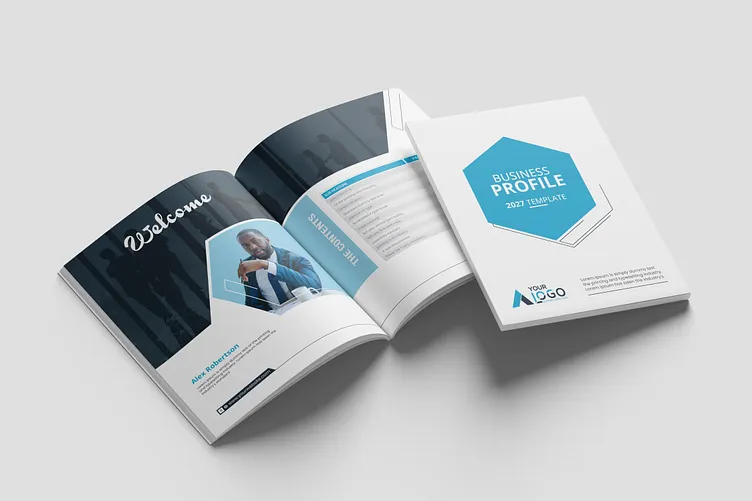
“Company profile design near me” is less about pin codes than collaboration—briefings, reviews, files, and print proofs done without friction across India.
People type company profile design near me hoping geography equals speed. Sometimes it does—especially when you need a same-city press check or a studio that already knows regional vendor quirks. Often, though, the right partner sits in another city and still delivers faster than a sluggish neighbour because their process is tight. For B2B documents, proximity matters less than clarity: briefs, approvals, file hygiene, and respect for your procurement calendar.
What “near me” solves in the real world
Legitimate reasons to prefer local talent include on-site photography direction, attending a leadership shoot, visiting a print shop for press proofs, or navigating industry associations that trust names they have met. If none of those apply, widen your search: a remote company profile designer with a proven export checklist may finish sooner than someone across the street who lacks copy discipline.
Remote company profile designer: how collaboration actually works
Modern profiles rarely need physical co-location. You share brand assets through a controlled link, review PDFs in marked rounds, and hop on short video calls for sticky decisions. The bottleneck is usually approvals on your side, not kilometres between teams. Ask how your studio handles version naming, how they lock pages after sign-off, and how they package final PDFs for portals that reject oversized uploads.
India B2B design collaboration: practical habits
Strong India B2B design collaboration starts with one owner on your team who batches feedback. Designers schedule deep-work blocks; constant partial comments destroy momentum. Agree on tools—email, Slack, or a client portal—and stick to them. Respect working hours but also exploit timezone-friendly design reviews: early approvals from your leadership can land in a studio’s afternoon work block without drama.
Optional site visit for profile project: when it pays off
An optional site visit for profile project planning helps when factories, labs, or campuses are the proof. Photographers capture real machinery; writers pick up safety culture language evaluators expect. If your profile is mostly services and software, a site visit matters less than tight reference interviews. Spend travel budget where it changes the story, not where it only checks a box.
Evaluating studios in Hyderabad, Mumbai, Bengaluru, Delhi NCR—or anywhere
Metro depth helps with print vendor networks and freelance copy depth, but talent is distributed. Judge studios on process artefacts: discovery agendas, sample tables, accessibility of type, and how they talk about tenders. Ask where they produced work similar to yours, not only where their desk sits.
Data handling when files cross cities
Remote company profile designer engagements should clarify where files live at rest, who has access, and how versions retire. If your IT team requires India-only storage or specific cloud tenants, say so before creative work starts. Watermarked proofs reduce leak risk during wide internal review cycles.
Language, localization, and layout expansion
If you eventually need Hindi, Marathi, Tamil, or other language editions, discuss expansion factors early. Translated copy often runs longer; your grid must tolerate reflow without breaking tables. A studio experienced in India B2B design collaboration will plan for bilingual captions in photography credits and for numerals formatting that finance expects.
When a local studio still wins on logistics
If you print large exhibition runs or need frequent on-site photography across plants, a nearby team can reduce flight days. The keyword company profile design near me still has meaning—just let logistics be the reason, not superstition about talent pools.
Review meetings that respect creative flow
Batch comments into single PDFs with numbered notes. Avoid sending partial thoughts across twelve emails. Respect that layout artists need contiguous hours; constant context switching inflates company profile turnaround time even when nobody misses a calendar milestone. If your team spans cities, pick a standing weekly slot that respects both marketing stand-ups and studio deep-work blocks.
When leadership wants “just one small tweak” that actually reflows four spreads, ask designers for impact sizing before approving. Transparency keeps trust intact when timelines shift.
Print coordination when your studio sits in another city
Remote does not mean print chaos. Studios courier paper dummies, coordinate with your local press using standard PDF/X workflows, and attend first-pull reviews virtually when travel is tight. If you truly need someone standing at a Heidelberg, budget travel—or hire a local print supervisor while creative stays remote. The phrase company profile design near me then maps to print logistics, not layout talent.
Stakeholder maps for geographically split teams
Draw a simple RACI: who recommends, who approves, who must only be informed. Share it with your studio. When marketing sits in Mumbai, finance in Delhi, and leadership travels weekly, remote company profile designer workflows succeed only if feedback windows are predictable. Avoid “surprise Friday afternoon” full rewrites unless you accept Monday slippage. Respect Indian holiday calendars on both sides when you promise India B2B design collaboration milestones.
Security questionnaires and vendor onboarding
Enterprise clients often send infosec PDFs. Your creative partner should complete them honestly: where files sync, whether subcontractors see assets, whether laptops disk-encrypt. If answers fail your policy, negotiate mitigations early—air-gapped transfers, masked client names in WIP files, or on-prem review hardware. Sorting this during company profile design near me discussions prevents procurement from stalling the project after creative is half done.
Optional: download analytics without violating privacy
If you host PDFs behind gated links, you can measure which sections stakeholders reopen—useful insight for the next refresh. Even simple server logs help you see whether partners actually fetch the file you emailed. None of this replaces qualitative sales feedback, but it informs whether your optional site visit for profile project photography resonated or whether people drop off before the leadership section.
Kickoff agenda template you can reuse
Hour one: introductions and success criteria. Hour two: audience and annexure review. Hour three: asset audit and gap list. Hour four: outline draft on a whiteboard or Miro. Send notes same day with owners. This rhythm respects busy executives while giving your remote company profile designer enough context to start typography exploration without guessing. If you compress kickoff into thirty minutes, expect hidden discovery tax later.
End kickoff with three explicit decisions: maximum page count, single approver for voice, and hard freeze date for numbers entering layout. Write them into the project channel pinned message. Small discipline compounds across timezone-friendly design reviews when people travel.
Feedback etiquette that keeps studios motivated
Praise specific spreads that work before tearing into weak ones. Tie critique to reader goals (“procurement may misread this table”) instead of subjective taste alone. Studios that feel respected push harder on polish. Toxic feedback loops inflate cost because account teams add senior oversight hours to shield creatives. Professionalism is a two-way street in India B2B design collaboration just as in any other market.
Disaster recovery: corrupted files and laptop failures
Ask studios how they snapshot sources nightly and whether you can receive incremental packaged backups at milestones. Cloud sync is not backup—creative teams should still version milestones you can restore if someone mis-saves. If your internal IT wipes laptops aggressively, keep a secured copy of approved PDFs and sources on controlled infrastructure. Calm company profile design near me or remote engagements both fail when a single laptop holds the only copy of week-six work.
FAQ
Will remote studios understand Indian tender formats?
Ask for examples. Good teams study your portal’s annexure list instead of guessing.
How do we handle GST and contracts across states?
Your finance team sets policy; the creative partner should fit your invoicing and PO rules cleanly.
Can we meet once locally and continue remotely?
Yes—hybrid models are common for kickoff and final print proof.
Site visit brief: how to use one day on the ground well
If you fly someone in for an optional site visit for profile project discovery, script the day. Morning: safety induction and plant walk with a communications chaperone. Midday: structured interviews with operations leads. Afternoon: controlled photography blocks with consistent PPE branding. Evening: raw image offload and backup verification. Without a brief, you burn airfare on pleasant tours that do not change spreads.
Capture ambient audio notes only if transcription complies with your policies. Remote teammates following along on video should still receive labelled photo dumps the same night so timezone-friendly design reviews continue the next morning without waiting for couriers.
Remote-first documentation of what the camera saw
Photographers should upload selects with filenames that map to outline sections—plant_wide_01, qc_lab_macro_04—so writers caption accurately. Add a short shot list checked off during the visit so nothing critical is forgotten because lunch ran long. If you cannot travel due to budget, a guided video walkthrough plus mailed sample products can substitute partially, but do not pretend video equals macro photography of surface finishes. Honesty about gaps keeps company profile design near me expectations realistic.
Tools and workflows for distributed team reviews
When your leadership is spread across Delhi, Mumbai, and Singapore—and your studio sits in another city—India B2B design collaboration depends on tool discipline, not goodwill. Define one platform for review PDFs before the project starts: a shared drive folder with strict version naming, a client portal your studio manages, or a document management tool your IT team already approves. The worst outcome is a hybrid: some feedback arrives in email, some in WhatsApp voice notes, some in a shared Google Doc comment, and one VP's annotated PDF arrives as a scanned image. Designers cannot safely reconcile four formats of feedback without introducing errors.
Agree on a review cycle rhythm at kickoff: studio uploads review-ready spreads by Wednesday noon; consolidated feedback from your named review owner arrives by Friday noon; studio acknowledges receipt and schedules the next drop. That ten-day loop compresses into predictability. Both sides know what to expect. Your remote company profile designer can plan deep-work blocks around the rhythm rather than checking email anxiously for surprise feedback dumps. The rhythm also exposes delays early—if Friday noon passes without feedback, the project owner can intervene before a missed milestone cascades into a tender deadline slip.
For timezone-friendly design reviews, consider asynchronous video review tools where reviewers record their screen with voice explanation. Designers often learn more from a thirty-second screen recording—"this table feels too dense, can we try a lighter grid?"—than from a written comment they must interpret. Short async video also prevents meeting inflation: not every spread needs a call. Save live calls for structural conflicts, brand direction debates, or final sign-off where a single voice must speak clearly. The meeting that clarifies a multi-party disagreement in thirty minutes is worth scheduling; the meeting to approve a comma change is not.
Planning for refresh cycles from the first project
The best time to plan your next profile refresh is during the brief for your current one. Ask your studio to design the master layout with update-friendliness in mind: paragraph styles that marketing can apply without InDesign expertise, data tables built as structured objects rather than drawn boxes, and a photography art direction brief that can be replicated internally when you need fresh leadership photos next year. A profile that requires a full agency rebuild to update a revenue figure or swap a headshot has failed its maintenance test before it ships.
Set a refresh trigger calendar at handover. A minor update sprint—typically one day of studio time—covers metric and personnel changes. A moderate refresh—two to three days—covers new service launches or sector expansions. A full redesign—a proper new project—triggers when brand identity changes materially or when the profile needs a structural rethink because your business has pivoted. Most companies benefit from minor sprints annually and a moderate refresh every two to three years, with full redesigns tied to brand events rather than arbitrary cycles.
When you engage a remote company profile designer, ask how they handle sprint clients between full projects. Some studios offer maintenance retainers; others prefer project-by-project briefs. Either model works if the source files remain accessible, fonts are properly licensed and stored, and the studio maintains a change log. Avoid the trap of using a different designer for each minor refresh—they will not know the original system and will introduce visual inconsistency that accumulates across updates. Consistent custodianship—same designer, same template, same brand ruleset—is the most underrated factor in keeping your profile investment productive across its full useful life.
Accessibility and legibility standards for Indian B2B documents
Accessibility in print and digital documents is moving from a best-practice recommendation toward an expectation in progressive procurement environments. Screen-reader compatibility for digital PDFs, minimum contrast ratios for text over background colours, and clear heading hierarchy that does not skip levels all improve usability for a broader audience without reducing the visual quality of your company profile design near me investment. For Indian B2B clients, the practical argument is even simpler: evaluators read profiles on wide-ranging devices, from ageing laptops with dim screens to modern phones in harsh outdoor light.
Ask your studio whether they test PDFs for accessibility before handover. A basic accessibility check—run through Acrobat's built-in tool or a free online validator—takes under ten minutes but catches the most common failures: images without alt text, reading order that jumps around the document, and colour combinations that fail WCAG contrast thresholds. You do not need your corporate profile to be perfect on all eleven WCAG success criteria, but you should ensure that key data tables are readable on a ten-inch screen in reduced brightness, and that hyperlinks are clearly distinguishable from body text by something other than colour alone. These standards help every reader, not only users with specific accessibility needs.
Pick fit over pin code
When you search company profile design near me, translate it to “who can ship a defensible PDF with minimal drama.” We work with teams across India and publish how we collaborate on company profile design.
Start a conversation from our company profile design services page, then keep our blog open for checklists while approvals move internally.
City pages: Mumbai, Delhi, Bengaluru / Bangalore, Pune, Ahmedabad, Hyderabad, Surat, Chennai, Kolkata, Jaipur, Nagpur, Indore, Gurugram, Noida, Haryana. Hire: company profile design agency (pan-India).