Blog
Business Profile Design Tips for Growing B2B Brands
By Funky Developers • 2026-07-09
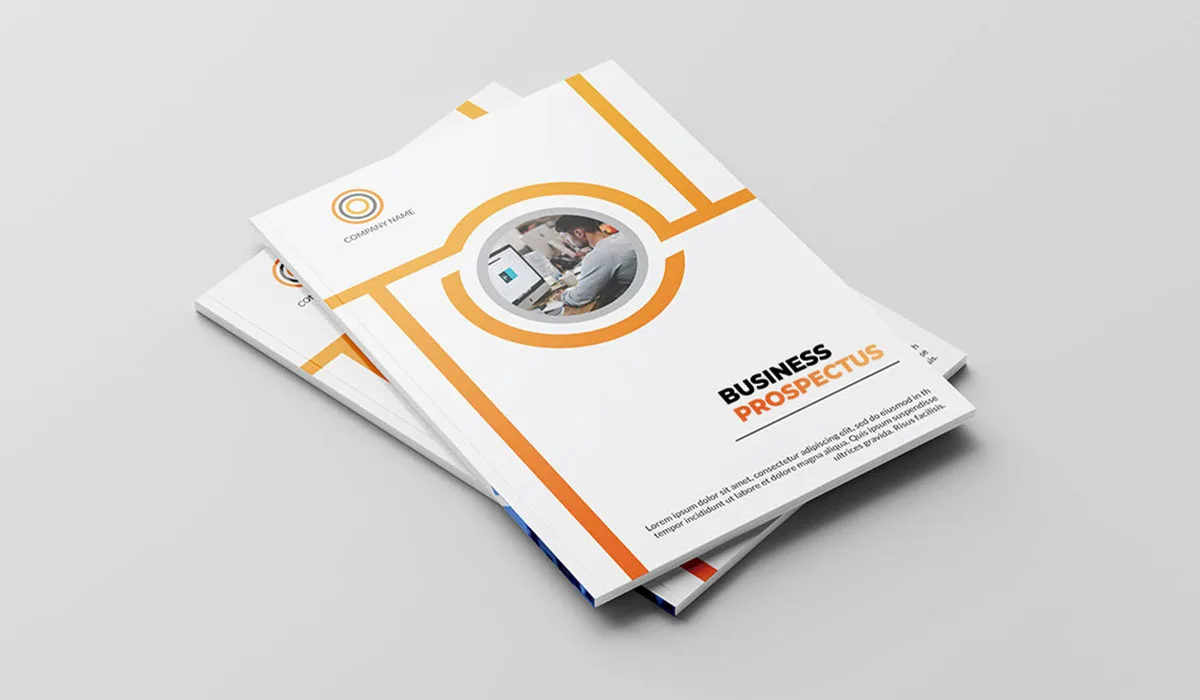
Practical business profile design tips for growing B2B brands — proof integration, layout strategy, naming clarity, one-pager formats, and annual refresh cycles.
Growing B2B brands face a specific challenge with their company profiles: the document needs to communicate current capability honestly while projecting the confidence of a more established organisation — and do both without misrepresenting where the business actually stands. Get that balance wrong in either direction and the profile either undersells a genuinely capable business or overreaches in ways that erode trust on closer inspection. These business profile design tips are written specifically for growth-stage companies navigating that challenge — from naming clarity and proof selection through to layout principles, format choices, and when to refresh the document as your business evolves.
Business vs Company Profile Naming Clarity
Before designing anything, it is worth being clear about what you are building and what you are calling it. The terms "business profile," "company profile," and "corporate profile" are used interchangeably in the market, but they carry slightly different connotations that are worth understanding — particularly if your document will be submitted to clients, investors, or tender committees who have expectations about format.
A business profile is typically used by smaller, growth-stage, or owner-operated businesses. It tends to be shorter (12–20 pages), more direct, and focused on services, team, and proof of delivery. A "company profile" is a broader term that covers everything from a 12-page SME profile to a 36-page conglomerate document. A "corporate profile" implies governance structure, board-level information, and the kind of formal disclosure typically required by institutional buyers and listed-company procurement teams.
Choose your terminology deliberately. If you are a Series A startup presenting to enterprise procurement, calling your document a "corporate profile" signals a maturity that the content may not yet support — and experienced evaluators will notice the mismatch. "Business profile" or "company profile" is more honest and entirely sufficient for growth-stage businesses. Your document's quality and content do the credibility work — the name is secondary.
Internally, agree on what the document is for and who the primary reader is before designing a single page. Is it a sales leave-behind? A tender submission document? An investor introduction? The format, length, and content emphasis should flow from that decision, not from what the previous version looked like.
Proof That B2B Buyers Trust
Growing B2B brands often struggle with proof because their track record is shorter than that of established competitors. The instinct is to compensate with more credentials — listing every small award, every short engagement, every industry membership. This approach backfires because a long list of minor proof points reads as insecurity rather than confidence.
The proof B2B buyers trust is specific, relevant, and honest. A precise description of a project type (without naming the client if necessary) with the scope, industry, and measurable outcome tells an evaluator far more than "served over 50 clients in 12 sectors." One well-described project reference beats five vague mentions.
Certifications and accreditations carry weight when relevant to the buyer's sector and risk profile. ISO 9001 for a manufacturing supplier, IS/IEC accreditations for a testing lab, CMMI for a software services company — these signal that the business has invested in structured process quality. List them with issuing body and validity, not just the certification name.
Client type indicators work when you cannot use client names. "We have supported three listed companies in the FMCG sector through their ERP transition" conveys the type of buyer you serve without naming confidential clients. Be honest about the scale and nature of engagements — do not describe a four-week pilot as a "strategic partnership."
For growth-stage businesses, team credentials often substitute for company track record. If your leadership team has combined decades of directly relevant experience, that belongs in the proof section, not just the team page. Buyer risk evaluation includes the people behind the business, not just the entity itself.
Layout Principles for Growing Brands
Growing B2B brands benefit from layouts that project stability and focus rather than trying to fill every page with content. A well-designed, somewhat sparse layout reads as confidence. A dense, over-decorated layout reads as effort to compensate for something missing.
Keep the visual identity restrained. If your brand has multiple colours, multiple typefaces, and multiple graphic styles, the profile will look like it was assembled by multiple hands over multiple years — which, for a growing business, it often was. A good designer will establish a single, clean visual system for the profile and apply it consistently across every page.
Organise the layout around the reader's decision journey, not your internal priorities. The reader's core questions are: What does this company do, specifically? Who have they done it for? Why should I trust them? How do I take the next step? Structure the layout so these questions are answered in order, clearly, within the first half of the document.
Use ample white space. Growing businesses often feel pressure to fill every page with content to appear established. This produces the opposite effect. A layout with generous margins, clear section breaks, and breathing room between elements reads as more professional and more self-assured than a dense, over-filled alternative.
If your brand is relatively new or has limited visual assets (few professional photographs, no established iconography), keep the design system simple: one strong typeface family, one primary brand colour, and clean geometric layout structures. These constraints produce more coherent results than trying to fill pages with low-quality visual assets.
What to Include at Different Growth Stages
The content and emphasis of your business profile should reflect the actual stage of your business. Including sections that your business has not yet developed enough to substantiate is a common mistake in growth-stage profiles — and experienced evaluators notice the gap between what is claimed and what the evidence supports.
At early growth stage (under five years, under ₹10 Cr revenue, limited project references), a strong profile focuses on founder credentials, the problem your business solves, your approach and process, early client outcomes described honestly, and a clear value proposition. Keep the document focused and honest — do not try to emulate a 20-year-old company's profile.
At mid-growth stage (5–10 years, established client base, track record in specific sectors), the profile can expand to include a proper case study spread, sector-specific capability sections, team depth beyond founders, and certifications achieved. This is the stage where the annual refresh (see below) becomes particularly important, as the business's capabilities and proof points evolve quickly.
At later growth or pre-enterprise stage (10+ years or strong market position in a defined sector), the profile should match the depth and governance clarity expected of an established business — detailed capabilities, governance information, financial indicators (where appropriate), and a clear picture of the leadership structure. At this stage, a profile that still reads as a startup document is a liability, not a charm.
The Annual Refresh Process
One of the most practical business profile design tips for growing companies is to build an annual refresh into the business calendar. A profile that was accurate when designed quickly becomes outdated — client references from two years ago, team pages missing new hires, certification listings with expired validity dates, financial indicators from a previous period. An outdated profile is not neutral — it actively signals that the business does not invest in its own presentation.
The annual refresh does not need to be a full redesign. For most businesses, it means updating a defined set of sections: proof points and project references (replace outdated ones with current examples), team page (update headshots and biographies to reflect current structure), certification listings (update validity periods), metrics and indicators (update to current financial year data), and any forward-looking statements that have now been realised or superseded.
Build this process into a document — a content brief template that your team fills in once a year, covering all the variable sections. Share this with your designer as an update brief. A well-structured refresh on an existing design template typically takes two to four weeks and a fraction of the original design cost.
Set a calendar reminder for one month before your financial year end to begin gathering updated content. This ensures the updated profile is ready for the new business year — when tender season, investor presentations, and conference attendance typically create the most demand for a current, polished document.
One-Pager Business Profile Tips
A one-pager business profile is a single-page (A4 or US Letter) overview of your business — designed for quick sharing at networking events, as an email attachment for initial outreach, or as a leave-behind when a full profile would be excessive. It is not a substitute for a full profile but a complement to it.
An effective one-pager contains: company name and tagline; a two-to-three-sentence description of what you do and who you serve; three to five key proof points or credentials; contact information and website; and a single visual element (logo, relevant image, or brand graphic) that makes it visually coherent. That is all. Every word on a one-pager must earn its place.
Design the one-pager at full A4 print resolution so it is equally usable as a printed sheet or a PDF attachment. Do not crowd the layout — use the same white space principles as the full profile. A cluttered one-pager is harder to scan than a full profile page because there is no second page to flow the content to.
Use consistent visual identity between your one-pager and your full profile. If a prospect receives the one-pager and then requests the full profile, the two documents should clearly belong to the same brand. Typography, colours, and graphic style should be identical — the one-pager is a summary, not a separate document.
Mistakes Growing Brands Make in Business Profiles
Several recurring mistakes reduce the effectiveness of business profiles designed for growth-stage companies. Recognising them is the first step to avoiding them.
Overreaching on claims. Describing a 30-person business as having "enterprise-scale capabilities" or a four-year-old company as having "decades of combined expertise" triggers scepticism in experienced evaluators who can check these claims. Be precise and honest — the right client will value authenticity over inflation.
Using the same profile for every audience. A profile designed for tender submissions includes different content emphasis than one designed for investor introductions or sales pitches. If you are using one document for all three contexts, you are probably serving none of them optimally. Consider a modular approach — core sections that stay constant, with audience-specific inserts or alternate page versions.
Neglecting the digital version. A print-ready PDF used as an email attachment is not optimised for digital reading — file sizes are often too large, there are no hyperlinks, and the layout may not render well on screens. Invest in a separate digital PDF with compressed file size, clickable links, and screen-optimised typography.
Designing before writing. Layout should follow content, not precede it. Profiles designed before the content is finalised inevitably contain placeholder-length text that has been padded or cut to fit the layout rather than edited for clarity. Write and edit content first, then design around it.
Frequently Asked Questions
How often should a growing B2B company update its business profile?
At minimum, once per financial year — updating proof points, team information, certifications, and any forward-looking statements. If your business is growing quickly (new major clients, new certifications, significant team expansion, entry into new sectors), a mid-year update may be warranted. An outdated profile circulated to prospects or submitted to tenders actively undermines the impression of a well-run, current business.
Should a growth-stage company invest in professional photography for its profile?
If your facilities, team, or products are visually representative of your quality, professional photography is a worthwhile investment that pays off across multiple documents and digital assets over several years. If your physical environment is not yet camera-ready, high-quality stock photography used consistently across the profile is a better choice than amateur photography that undermines an otherwise well-designed document. The decision should be pragmatic, not aspirational.
What is the difference between a business profile and a capabilities statement?
A capabilities statement is typically a shorter document (two to four pages) used specifically in government and institutional tender prequalification contexts. It summarises core competencies, relevant past performance, and organisational data in a standardised format. A business profile is a more comprehensive, design-led document covering the full organisational story. Many B2B businesses need both — the full profile for client-facing use and a capabilities statement format for formal procurement contexts.
Can I use testimonials in a business profile?
Yes, with appropriate care. Attributed testimonials from actual clients — with the client's name, title, and company included — are valuable proof points that add human credibility. Anonymous testimonials ("A manufacturing client said...") carry less weight. If clients are willing to provide a quote but prefer not to be named in a public document, consider asking for a reference call instead, and mention in the profile that client references are available on request.
What should I never include in a business profile?
Do not include unverifiable statistics, fabricated client names or project references, forward-looking financial projections presented as current fact, claims that misrepresent the scale or nature of past engagements, or outdated team information with departed staff. These errors, when discovered by an evaluator or prospect, damage trust in everything else the profile claims — including the things that are entirely accurate.
Build a Profile That Grows With Your Business
A well-designed business profile is one of the most cost-effective marketing assets a growing B2B brand can invest in — it works in tenders, sales meetings, investor conversations, and partner introductions simultaneously. The key is to build it correctly from the start: honest, specific, structured, and designed for the reader's decision journey rather than your internal narrative.
Explore our business profile design services for B2B brands at every growth stage. Whether you need a first professional profile or an annual refresh of an existing document, see how structured profile design turns your capabilities into a persuasive, credible asset. Browse our profile strategy articles for more guidance on content, proof, and design for growing businesses.
---