Blog
Pages List Ideas for Company Profile Design (Pick What Fits Your Goal)
By Funky Developers • 2026-07-10
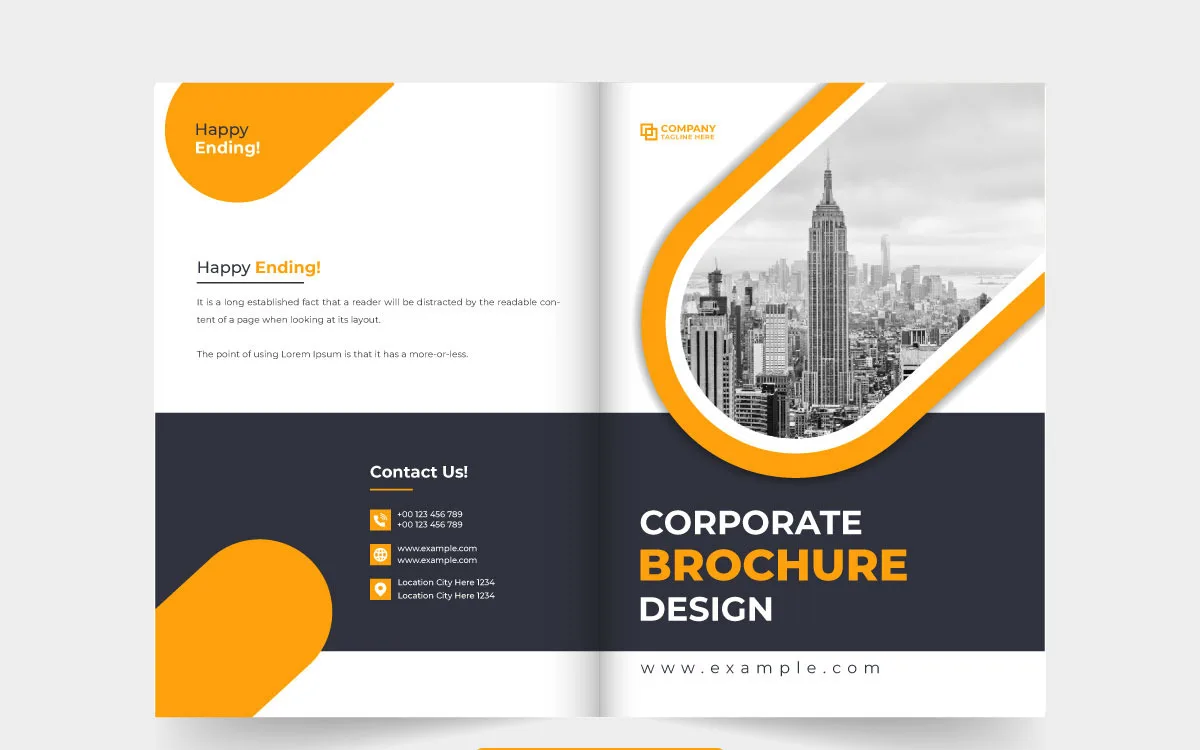
A practical modular list of company profile pages — must-have spreads, nice-to-haves, tender-only annexures, and how to choose the right pages for your goal.
Not every company profile needs the same pages. A profile designed for sales lead generation has different content priorities than one built for tender submission or investor introductions. Yet most businesses approach their profile design with either a fixed template ("This is what a company profile looks like") or an "everything" approach that results in a 40-page document that no one reads in full. This article provides a structured company profile pages list — organised by must-have, nice-to-have, and tender-only — with guidance on how to select the right combination for your specific goal. Use it as a menu, not a mandate.
The Core Must-Have Pages
Every company profile, regardless of its purpose or the organisation's size, should contain a set of core pages that answer the reader's most fundamental questions. Without these, the document cannot function as a credible company overview.
The cover page. Your first impression — company name, tagline, and visual identity. Should be designed for the context in which the profile will be used: a print cover may have different finish considerations than a digital PDF cover. More on this in our separate article on cover design.
Company overview or "About Us" spread. A concise statement of who you are, what you do, where you operate, and what scale you represent. This should answer the reader's orientation questions in under three minutes of reading: What is this company? What problem do they solve? How big are they?
Services or products section. A clear, organised description of your core offerings. This is not an exhaustive list of everything you have ever done — it is a structured presentation of your primary service or product categories, each with enough detail to confirm relevance to the reader.
Why choose us or differentiator page. What makes your business the right choice compared with alternatives? This requires honest, specific differentiation — not generic claims like "quality, integrity, and innovation" but particular reasons grounded in how you work, what you have built, or what results you achieve.
Contact and next steps page. The final page should make it unambiguously easy to reach you: name, phone, email, website, physical address, and ideally a specific individual or team to contact. A profile that ends with no clear path to action has failed its primary commercial purpose.
Services and Products Pages
The services section is where most company profiles are either too thin (one page covering everything at the same level of abstraction) or too expansive (ten pages that read like a product catalogue). Neither serves the reader well.
For service businesses, organise offerings by outcome category rather than by internal department. A consulting firm might structure its services as: strategy consulting, implementation support, and performance monitoring — each described by what the client achieves, not what the firm's team does internally. This audience-centric framing is more persuasive than an org-chart-aligned list of service lines.
For product businesses, structure by product category with key specifications included — not full technical datasheets, but the headline specs that allow an evaluator to determine product fit quickly: capacity range, material standards, compliance certifications, and application sectors.
Consider a dedicated sector or industry page if you serve clearly defined verticals. A spread showing the specific sectors you work in — with brief notes on how your offering applies to each sector's specific requirements — demonstrates relevance to a reader from that sector much more directly than generic service descriptions that require them to infer the application.
Do not describe services or products you no longer actively provide, or capabilities you have not yet developed, just to appear more comprehensive. Evaluators who follow up on specific claims and find them unsupported lose trust in everything else in the document.
Proof and Case Study Spreads
Case study spreads are among the most persuasive pages in any company profile — and among the most frequently done poorly. An effective case study is a structured narrative: challenge (what the client faced), approach (what you did, described in enough detail to be credible), and outcome (what changed as a result, with measurable specifics where possible).
A case study spread does not need to name the client to be credible — many B2B businesses legitimately cannot disclose client names. What it needs is enough specific context to be believable: the industry, the scale of the engagement, the specific problem type, and the concrete outcome. "A mid-size pharma company facing regulatory audit gaps in their documentation system" is more credible than "a pharmaceutical client."
For the case study spread to work visually, it needs a clean layout with clear section labels (Challenge / Approach / Outcome or similar), relevant supporting imagery (facility, product, team, or a neutral graphical element), and the outcome data presented as a visual callout rather than buried in body text.
Testimonials and references belong here or in an adjacent page, not scattered throughout the document. A reference page listing three to five clients (by name and sector, with contact availability on request) provides the kind of third-party validation that no amount of self-description can replicate.
Compliance and Governance Pages
Compliance pages are non-negotiable for specific audiences — government procurement, institutional supply chains, listed-company vendor panels, and regulated industries. For other audiences, they are reassurance rather than requirement.
A standard compliance page should include: company registration details (CIN, GST, PAN), relevant industry licences or registrations, quality certifications (ISO, BIS, industry-specific), and any sector regulatory body registrations. Present these in a table or structured list with issuing authority and validity period — not as a text paragraph that buries the individual credentials.
For businesses in healthcare, pharma, food processing, or any regulated sector, include regulatory body registrations (CDSCO, FSSAI, BIS, etc.) on a dedicated page. Evaluators from these sectors look for these details specifically and evaluate their absence as a risk signal.
A governance page — covering board structure, ownership, audit and compliance framework — is appropriate for corporate profiles submitted to institutional investors, large enterprise buyers, or government agencies. For SMEs submitting to smaller clients, the overhead of a full governance spread may not be warranted; a paragraph in the "About Us" section covering company structure and ownership is typically sufficient.
ESG and Sustainability Pages
An ESG page in profile documents has shifted from optional to expected in many B2B contexts — particularly for companies supplying to listed entities, MNCs with supplier sustainability requirements, or government departments with green procurement policies.
The minimum viable sustainability page covers three areas: environmental practices (waste, energy, emissions — even if data is preliminary), social initiatives (workforce welfare, community engagement, diversity), and governance basics (ethical conduct, compliance framework, grievance mechanisms). You do not need a full GRI-aligned sustainability report — you need honest, specific information that tells an evaluator you take these issues seriously and can demonstrate it.
If you have third-party validation of your sustainability commitments — an ISO 14001 certification, a recognised CSR programme, participation in a sustainability reporting framework — include it with the issuing body and scope. If you are at an earlier stage of formalisation, state that honestly and describe your current practices without overstating their maturity.
Avoid sustainability pages that are purely aspirational — pledges without evidence, commitments without implementation details, and language that uses all the right words without any operational substance. Experienced evaluators distinguish between organisations that have genuinely integrated sustainability thinking and those that have added a page to tick a box.
Nice-to-Have Growth Pages
Beyond the must-haves, there is a category of pages that add significant value when done well but are not universally necessary. Include these when your content is strong enough to justify them.
A team or leadership page. Essential for professional services firms where the team is a key part of the value proposition. Optional (but useful) for product companies where the team is important context rather than the primary selling point. Only include if you can do it properly — professional photographs, substantive bios, and consistent treatment across all individuals.
An awards and recognition page. Useful when the awards are genuinely recognised in your sector and relevant to your audience. Avoid lists of minor local awards or membership plaques that read as padding. One or two significant, named industry recognitions carry more weight than ten generic "excellence awards."
A partners and technology page. Relevant for IT companies, system integrators, channel partners, and businesses whose credibility is partly derived from the brand associations they carry — OEM partnerships, software vendor authorisations, industry consortium memberships.
An infrastructure or facilities page. Valuable for manufacturing, logistics, healthcare, and any sector where physical infrastructure signals capacity and capability. Include floor area, equipment specifications, and geographical coverage — not just photographs of empty factory floors.
Tender-Only Annexures
Tender profiles — company profiles submitted as part of a formal bid or prequalification document — often require specific sections that are not needed in standard sales or investor profiles. These optional pages tender profile sections are worth designing as modular inserts that can be added to your standard profile when required.
An annexure index page is standard practice for tender submissions involving multiple supporting documents. It lists all enclosed documents with their section labels, making it easy for evaluation committees to locate specific items. A well-designed annexure index page signals familiarity with formal procurement processes and saves evaluators time.
A past performance or project references list. Tender evaluations often require a structured list of relevant past projects — client name (or category if confidential), project scope, contract value range, duration, and completion date. This is different from a marketing case study; it is a factual record formatted for evaluation scoring.
Financial information or turnover declarations. Some tenders require evidence of financial standing. Include a turnover declaration page (financial year, declared turnover, CA attestation reference) or a summary financial indicators spread for these contexts. This is not standard in marketing profiles and should be included as a tender-specific insert.
Statutory compliance declarations. A checklist-format page confirming GST compliance, PF/ESI registration, labour law compliance, and other regulatory standing is often required for government tender prequalification. Pre-designing this page means it can be dropped into any tender submission without last-minute scrambling.
How to Choose Pages for Your Goal
With this menu of available pages, selecting the right combination becomes a decision matrix. Match pages to the primary purpose of the document.
For a sales-focused profile (prospects, sales meetings, digital sharing): Cover, Company Overview, Differentiators, Services/Products, Case Studies, Team, Certifications (summary), Contact. Aim for 12–20 pages. Keep it focused and persuasive.
For an investor or partnership introduction profile: Cover, Company Overview, Market Opportunity (if applicable), Services/Products, Financial Indicators, Leadership, Track Record, Growth Strategy, Contact. 16–24 pages.
For a tender submission profile: Cover, Company Overview, Services/Products, Sector Experience, Past Performance List, Key Team Members, Certifications (detailed), Governance, Statutory Compliance, Financial Declaration, Annexure Index. 20–36 pages depending on tender requirements.
For a corporate stakeholder profile (board distribution, institutional buyers, listed-company supplier panels): Cover, Company Overview, Corporate Narrative, Governance, Leadership/Board, ESG/Sustainability, Financial Indicators, Compliance, Contact. 20–28 pages.
Every additional page must earn its place by serving the primary reader's decision process. When in doubt, ask: "Would removing this page make the document less useful to its primary reader?" If the answer is no, the page is optional at best and padding at worst.
Frequently Asked Questions
How many pages should a company profile have?
The right length is defined by purpose and audience, not by convention. Most effective B2B company profiles fall between 12 and 32 pages. Sales-focused profiles trend toward the shorter end; tender submission profiles toward the longer end. Every page should contain content that serves the reader's evaluation process — pages added to appear more substantial without genuine additional content always weaken the document's overall credibility.
Do I need a separate profile for tender submissions and for client meetings?
Not necessarily a fully separate document, but tender submissions often require specific sections (past performance lists, statutory compliance declarations, financial information) that are not part of a standard client-facing profile. A modular design approach — a core profile with optional inserts for specific use cases — is more efficient than maintaining two entirely separate documents. Build the core first, then design reusable annexure pages for tender contexts.
Should I include a mission and vision page?
Only if your mission and vision are substantive, specific, and genuinely differentiated. Generic mission statements ("To be the leading provider of quality solutions with integrity and innovation") add no value and are so common across profiles that evaluators skip them. If your organisation's purpose is genuinely distinctive and operationally expressed — as in a social enterprise, a sector specialist, or a B-Corp certified company — a mission spread is worth including. Otherwise, weave the essence of your purpose into the company overview spread and skip the standalone page.
What is the difference between a case study spread and a project reference list?
A case study spread is a designed narrative of one or two engagements — it tells a story with context, challenge, approach, and outcome. It is marketing-oriented and designed for persuasion. A project reference list is a structured factual table listing multiple past engagements with standardised fields: client type, project scope, value range, duration, and completion status. It is used in formal procurement evaluations for scoring rather than storytelling. Many businesses need both — case study spreads in their marketing profile and a reference list format for tender annexures.
Can I add pages to an existing profile without a full redesign?
Yes, if the original profile was built in an editable format (InDesign, Figma, or similar) with a consistent design system. Adding a new page that follows the established typographic styles, colour palette, and layout grid is typically straightforward for a designer. This is one of the reasons retaining editable source files from your original design project is important — it reduces the cost and time of future updates and additions considerably.
Design a Profile With the Right Pages for Your Goal
The most effective company profiles are not the longest — they are the most purposefully structured. Knowing which pages to include, which to skip, and how to sequence them for your primary reader is the foundation of a profile that actually performs in tenders, sales meetings, and investor conversations.
Explore our company profile design service to see how page selection, content strategy, and visual design work together to build a document that serves your specific goals. Whether you are designing a first profile or restructuring an existing one, our profile design process starts with your audience and works backward to every page decision. For more on profile structure and content strategy, browse our design resource articles.
---