Blog
Company Profile Design: A Practical Guide for Indian B2B Teams (2026)
By Funky Developers • 2026-05-12
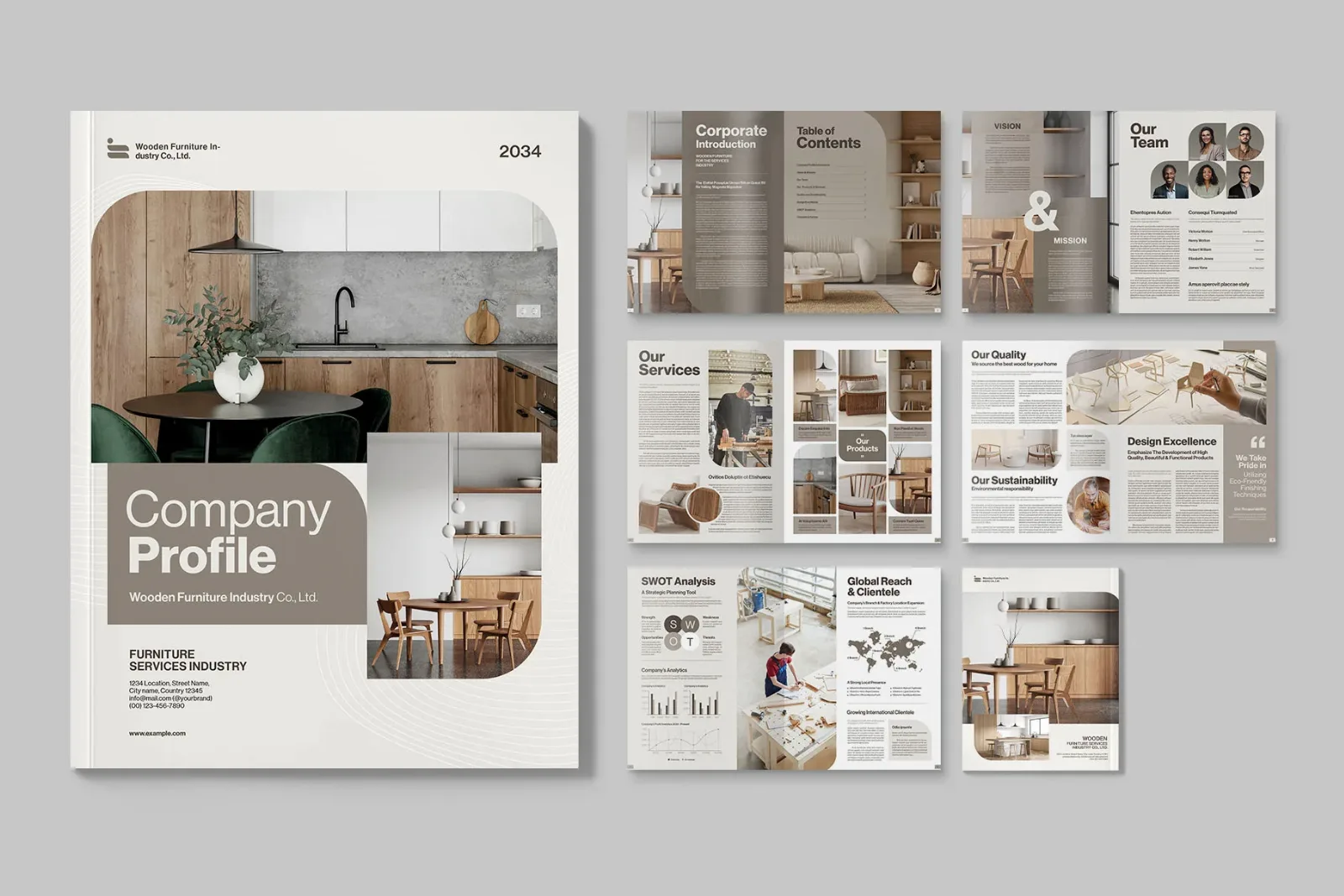
Learn what company profile design includes—structure, layouts, and PDF delivery—plus timelines and tender-ready tips for growing B2B brands in India.
If you sell to other businesses, you have probably been asked for a company profile at the worst possible time: right before a tender deadline, an investor meeting, or a partner review. Company profile design is the discipline of turning your facts into a document people actually read—clear story, credible proof, and a layout that feels intentional on screen and on paper.
What company profile design actually covers
Most teams assume the job is “make it look nice.” The real work sits earlier. Good company profile design aligns messaging with how you win deals: who you help, what you deliver, how you are different, and what evidence supports those claims. Designers structure pages so skimmers get the headline story in thirty seconds, while evaluators can drill into methodology, certifications, and case-style proof without losing the thread.
That usually means a defined page flow: cover and positioning, services or products, sectors you serve, delivery process, quality or compliance, leadership or team, clients or logos (where permitted), and contact or next steps. The exact order depends on whether the reader is procurement, a technical buyer, or an investor—but the principle stays the same: one narrative, one visual system.
Company profile layout: grids, type, and hierarchy
Your company profile layout should do more than decorate. Hierarchy tells the reader where to look first: headline, subhead, supporting facts, callout metrics. Consistent grids keep dense information—service matrices, office locations, year-over-year growth—from feeling chaotic. White space is not wasted space; it signals confidence and makes long documents feel lighter.
When you brief a studio, share examples you like, but also share constraints: minimum font sizes for print, brand colours that must pass contrast checks, and any mandatory legal lines. A strong layout system scales from a twelve-page booklet to a shorter leave-behind without looking like a different brand.
Company profile PDF: the deliverable everyone asks for
In practice, the company profile PDF is still the default handoff format. Procurement portals ask for uploads. WhatsApp and email need a single file attachment. Print vendors want export-ready artwork with bleed and embedded fonts. Your design team should plan for both digital-first reading (single-column sections, clickable contents) and print-safe margins if you will run batches for conferences or site visits.
Export settings matter. Downsampled images can look fine on a laptop but muddy in print. Hyperlinks can break if you flatten incorrectly. If you expect frequent text updates, ask for an editable master and a clear revision policy so small copy changes do not become full rebuilds.
Tender company profile: what evaluators scan for
A tender company profile is still a story, but the audience is stricter. Evaluators look for incorporation details, GST or tax identifiers where relevant, registration numbers, ISO or industry certifications, bank details only when the tender explicitly asks for them, and a clean description of scope and past performance. Designers help by creating repeatable tables for financial highlights, project lists, and compliance callouts so you can update numbers without redesigning every spread.
Never invent credentials. The design job is to present truthful information with clarity. If certain client names are confidential, use anonymised case patterns or sector labels your legal team approves.
Brand guidelines for company profile: staying on-brand at scale
If you already have a brand book, the profile should follow it—logo clear space, colour roles, typography tiers, and photography style. If you do not, the profile project is a good moment to document decisions: primary and secondary type, rules for charts, icon style, and how you treat partner logos. Strong brand guidelines for company profile work reduce rework when you later produce pitch decks, capability statements, or microsites that must match.
Typical timeline and what slows projects down
Most professional projects move fastest when decision-makers, copy sources, and legal review are identified on day one. Delays usually come from missing metrics, unsigned client references, leadership bio approvals, or late logo packs from partners. Build a buffer before hard deadlines; printing and corporate approvals rarely forgive last-minute changes.
How company profile design supports sales, bids, and partnerships
Your profile is rarely the first touchpoint, but it often arrives at the moment of judgment. A partner skims it before a diligence call. A procurement lead compares yours with two other vendors. A consortium partner checks whether you have relevant sector experience. Strong company profile design makes those moments feel intentional: the reader sees a firm that knows how it wins work, not a firm that patched slides together overnight.
Think of the document as a reusable asset. Sales can excerpt spreads into proposals. Marketing can align website copy to the same proof points. HR can borrow tone and facts for recruiting collateral. When the underlying layout system is clean, you reduce the drift that happens when every team maintains its own slightly different version of history.
What to gather before the first design sprint
Designers move faster when you send structured inputs rather than a folder of random PDFs. Collect final logo files in vector format, approved colour codes, a list of services with short definitions, three to five proof projects you can discuss publicly, leadership names and titles, office locations, certifications with expiry dates, and any mandatory legal disclaimers. If you use partner logos, confirm you have written permission and the correct logo variants.
Numbers should carry a source and a date. Revenue bands, headcount, years in business, and project counts change; your company profile layout should make updates painless. Ask your studio to design tables and callout modules you can refresh quarterly without rebuilding the whole document.
Mistakes that quietly undercut credibility
Readers forgive plain design faster than they forgive sloppy facts. Mismatched years across pages, outdated leadership photos, pixelated logos stretched from low-resolution PNGs, and inconsistent service names all signal operational drift. Another common issue is overclaiming: “market leader” without context reads hollow to experienced buyers.
Design can help you stay honest. Callouts can label “as of FY2025” beside metrics. Footnotes can explain methodology for growth charts. A careful company profile PDF export checklist—fonts embedded, links tested, print marks verified—prevents the embarrassing moment when a buyer opens your file and sees missing glyphs or broken navigation.
Accessibility, readability, and how evaluators actually read
Procurement teams skim on laptops with brightness turned down. Investors read on flights from phones. Accessibility is not only a moral good—it protects comprehension. Sufficient colour contrast, minimum body sizes, left-aligned body copy for long paragraphs, and descriptive link text (“download capability statement”) instead of generic “click here” all help. Screen-reader users benefit when headings follow a logical order without skipped levels.
Your company profile layout should reserve predictable positions for recurring elements: where certifications always live, where contact details repeat, and where annexure references point. Predictability speeds review for people who compare five vendors in one afternoon. It also trains your own sales team: they learn where to point a client’s eyes during a live walkthrough.
Version control habits that save money after launch
Profiles are living documents. Finance restates revenue; you add a new ISO certificate; leadership rotates. If you name files “Profile_final_FINAL_v9.pdf,” you will eventually email the wrong one. Agree on a naming scheme, a single canonical storage folder, and who may authorise exports. If designers hand you source files, store them where IT backs them up—not on a personal laptop that quits the week before a tender.
One-page takeaway for leadership approvers
If you only read one section before signing off, remember this: company profile design is risk management expressed as typography and narrative order. The document proves you can execute complex work without sloppy edges. Spend your political capital on accurate numbers and honest positioning; let designers make that discipline visible. When the PDF finally ships, every team that touches revenue should point to the same file—not eight variants living in chat threads.
FAQ
How long should a company profile be?
Length follows purpose. Tender packs often run longer; investor teasers stay shorter. Aim for completeness without repetition—quality beats page count.
Do we need separate print and digital files?
Often yes. Interactive PDFs for email, high-resolution print PDFs for vendors, and sometimes a locked client-facing version protect you from accidental edits.
Can we start before copy is final?
Layouts can start with structured placeholders, but final typography and page breaks need final copy. Parallel tracks save time only when the outline is stable.
Industry-specific requirements in company profile design
No two sectors read the same profile with the same expectations. Construction firms submitting government tender packs need GST registration numbers, PAN cards, performance bank guarantee terms, and a precise past-work table formatted for the portal's annexure checklist. Pharmaceutical companies must cite manufacturing licences, WHO-GMP compliance, and validation logs that technical evaluators will cross-check against public registries. Infrastructure developers lean on project timelines with milestones, certifications under relevant BIS or international standards, and safety incident records. Each sector shapes not only copy but layout: data-heavy compliance sectors demand structured tables with clear footnotes; consumer-facing services may place photography and client testimonials higher in the hierarchy because evaluators judge cultural fit quickly.
Your company profile design brief should name the primary sector and any cross-sector ambitions. If you supply both private and public clients, those audiences weigh different sections differently—one wants innovation proof, the other wants compliance evidence. Designers can build modular spreads that swap content blocks without rebuilding the grid. A manufacturing process spread can carry QC data for ISO-conscious procurement and efficiency metrics for commercial buyers, depending on how you sequence the same base layout. When you brief a studio with sector context upfront, you avoid the common failure of delivering a generic document that impresses nobody who matters.
Regulatory changes also create forced refresh moments. A new BIS standard, a revised SEBI disclosure norm, or an updated factory certification mandates a spread change before the next submission. Build a maintenance checklist tied to your industry calendar—not just an annual review. Studios familiar with your sector will flag changes proactively; those that are not will wait for you to notice. When you evaluate partners, ask specifically what B2B verticals they have shipped to in the last twelve months and request a page sample from a comparable sector assignment.
Working with multiple internal approvers without design chaos
Most profiles stall not because designers are slow but because five people with sign-off authority discovered they disagree—in round three, at 9 p.m. Finance wants conservative tone; marketing wants energy. Legal wants hedged language; the managing director wants punchy claims. Sales wants testimonial pages legal refuses to clear. These tensions are normal. They become expensive only when each stakeholder reviews independently and sends contradictory notes in separate emails while the studio waits.
Build a single review owner before the project starts—one person with authority to bat contradictory notes into a consolidated document before it reaches the designer. That person does not need creative skills; they need organisational authority and an understanding of what the file must survive. A structured review PDF with numbered comments, not a screenshots-in-WhatsApp approach, keeps everything auditable. Each round should carry a cover note: "Approved sections / Sections under discussion / Sections blocked pending legal." Designers work faster when they know exactly which spreads they may touch.
Separate voice decisions from fact decisions. Marketing can approve tone before legal approves numbers. If both reviews run in parallel, conflicts compound. Run a voice pass in round one, a facts-and-compliance pass in round two, and reserve round three for minor polish only. This sequence reduces the chance that a legal approval triggers a marketing rewrite that triggers another legal cycle. Strong company profile PDF governance is not bureaucracy for its own sake—it is the fastest path from blank brief to shipped file when political complexity is high. Agree the review sequence in writing during kickoff; it is far easier to enforce before the first spread lands than after three rounds of contradictions.
Setting expectations before your profile goes to print
A common source of disappointment at project close is not poor design but misaligned expectations about what the final file will do. Set those expectations explicitly before the first spread is approved for production. Your company profile PDF will not replace sales conversations; it will make those conversations better prepared. It will not rank on search engines the way a web page does; it will sit on portals, inboxes, and printed shelves where that dynamic does not apply. It will not stay accurate without maintenance; plan a review cycle or the document ages against you.
Before print approval, run a structured checklist: are all certifications currently valid and not expiring within the expected lifespan? Has finance signed off every revenue figure? Has legal reviewed every superlative and claim that could read as contractual? Have leadership photos been retaken if the originals are more than two years old? Has the canonical file been uploaded to your digital asset system so old versions cannot circulate? These fifteen minutes of structured review prevent the far more expensive scenario of post-print corrections, portal resubmissions, or a prospect asking why a figure differs from your website. Agree on this checklist during your brief and revisit it at each major approval milestone so it becomes part of your company profile design governance rather than a last-minute scramble.
Next steps
If you want a document that reads as carefully as your best pitch, start with a focused brief and a realistic timeline. Our team handles end-to-end company profile design for B2B brands—structure, visual system, and production-ready company profile PDF files you can share with confidence.
When you are ready to move from slides-in-a-folder to a single flagship document, explore our professional company profile design services and share your sector, page target, and any tender constraints—we will map a sensible production path.
If you want the same narrative rigour applied to a tender-ready company profile or a leadership-ready corporate booklet, tell us which gatekeepers read the file first—we shape order and emphasis around that reality.
For more practical notes on profiles and layouts, browse our blog after you book the core pages you need.
Next: company profile design services in India · hire our company profile design agency · how to create a company profile.